
October 7, 2026
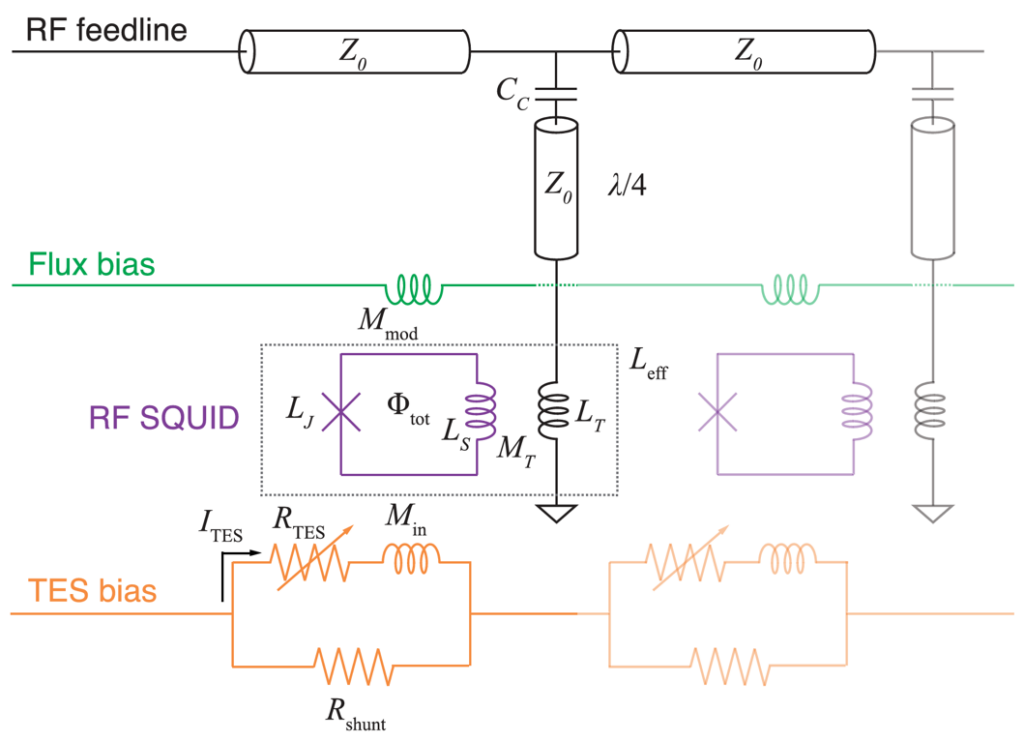
Detecting tiny energy deposits produced by particle interactions requires highly sensitive sensors operating at cryogenic temperatures. In the RICOCHET experiment, we detect coherent elastic neutrino-nucleus scattering (CEvNS) in superconductor targets read out with transition-edge sensors (TES). Increasing the number of detector channels is essential for accumulating sufficient exposure, but doing so also requires a scalable readout system. This is addressed with microwave SQUID multiplexers, which allow many TESs to be read out through a common RF feedline. In this work, we designed, fabricated, and characterized a six-channel aluminum multiplexer and demonstrated noise performance comparable to previously reported niobium-based devices. We also reduced the amplifier contribution to the readout noise by using a Josephson traveling-wave parametric amplifier as the first-stage amplifier. These results demonstrate aluminum as a promising platform for scalable, low-noise readout of future cryogenic detector arrays.
This work was a collaborative effort between MIT EQuS, Joe Formaggio’s group, and MIT Lincoln Laboratory. Congratulations to Jiatong and all co-authors!
September 24, 2026
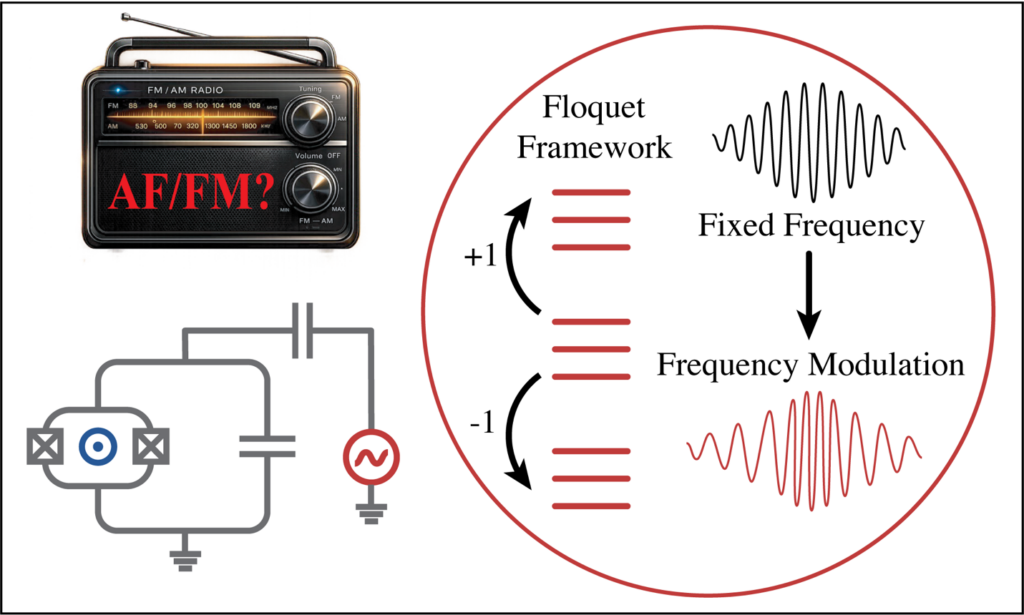
High-fidelity quantum gates are essential for running quantum algorithms and building error-corrected quantum computers. In superconducting qubits, microwave control on fixed-
frequency devices offers hardware simplicity and reduced flux-noise sensitivity, but can suffer from frequency crowding. Flux control enables faster and more tunable gates, but adds
calibration complexity and noise sensitivity. Here, we propose an all-microwave framework for designing gates using both amplitude and frequency modulation of the drive. By treating the
microwave drive frequency as an additional control knob, our approach brings tunability to fixed-frequency qubits without requiring direct qubit-frequency tuning. This approach can help
alleviate frequency-crowding constraints while preserving the reduced flux-noise sensitivity and coherence advantages associated with fixed-frequency qubits. Numerical simulations with
typical transmon parameters demonstrate a universal set of single- and two-qubit gates, including X, Hadamard, phase, and cz gates, with control errors well below 0.1%. These results
suggest that frequency-modulated microwave control can provide a flexible route to fast, high-fidelity gates in superconducting quantum processors.
Congratulations to Andy and all co-authors with the MIT EQuS Group!
August 12, 2026
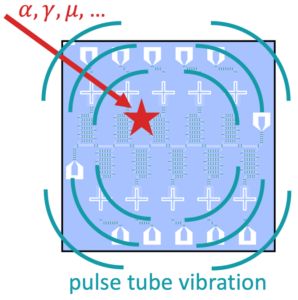
Superconducting qubits are promising for quantum computing, but their performance is hindered by correlated errors from environmental factors like ionizing radiation and cryocooler vibrations. The authors distinguish these error types in the same device by their distinct features, and use accelerometers to directly link specific errors to pulse tube vibrations. This study also reveals that qubits engineered to resist radiation are protected against these vibration-induced errors as well. Identifying the sources of correlated errors will inform future mitigation strategies for building more robust quantum computers.
Congratulations to Hannah and all co-authors with the MIT EQuS Group and MIT Lincoln Laboratory!
See also: Editors’ Selection from Physical Review Applied
August 5, 2026
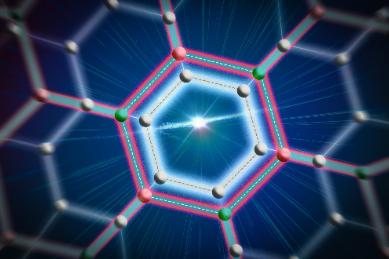
Monolayer niobium diselenide (NbSe₂) is a 2D material that superconducts at cyrogenic temperature. However, it rapidly degrades in air due to oxidation, making large-scale growth and device integration difficult. A new growth method – encapsulation epitaxy” – addresses this problem by using graphene or hexagonal boron nitride as a growth template. The template enables NbSe₂ growth between the substrate and the template, thereby protecting it from oxidation. The resulting film superconducts with transition temperature around 1 K and exhibits an enhanced charge-density-wave transition near 177 K. Combined with low-oxidation transfer techniques and superconducting edge contacts, the material was successfully integrated into superconducting coplanar-waveguide resonators; resonator measurements indicated a NbSe2 kinetic inductance of ~0.7 nH per square. This approach offers an additional path toward wafer-scale superconducting quantum circuits based on two-dimensional materials.
Congratulations to Xudong Zheng, Sameia Zaman, Kenan Zhang and all co-authors with the MIT Nanomaterials and Electronics Group (NEG) and MIT Engineering Quantum Systems Group (EQuS)!
This was also featured in MIT News
See also: News and Views from Nature Physics
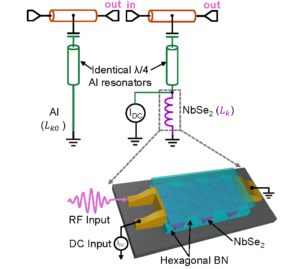
Two-dimensional superconductors offer a promising platform for compact circuit elements in quantum devices. In this work, we characterize a key microwave property—kinetic inductance—in atomically thin NbSe₂. We do so by integrating hBN-encapsulated NbSe₂ flakes into superconducting coplanar-waveguide resonators and characterize their microwave response using techniques from circuit quantum electrodynamics. We measure NbSe₂ from the few-layer regime down to a single monolayer and find that its kinetic inductance increases as the material becomes thinner, reaching 1.2 nH/sq in the monolayer limit. We also observe a thickness-dependent crossover from clean- to dirty-limit behavior, suggesting possible roles of scattering, multiband superconductivity, and geometric confinement influence ultrathin NbSe₂. These films exhibit high kinetic inductance while maintaining weak self-Kerr nonlinearity, making them potentially useful for compact, nearly linear inductors in superconducting quantum circuits.
Congratulations to Sameia and all co-authors with the MIT EQuS Group, Harvard University and MIT Lincoln Laboratory!
July 23, 2026
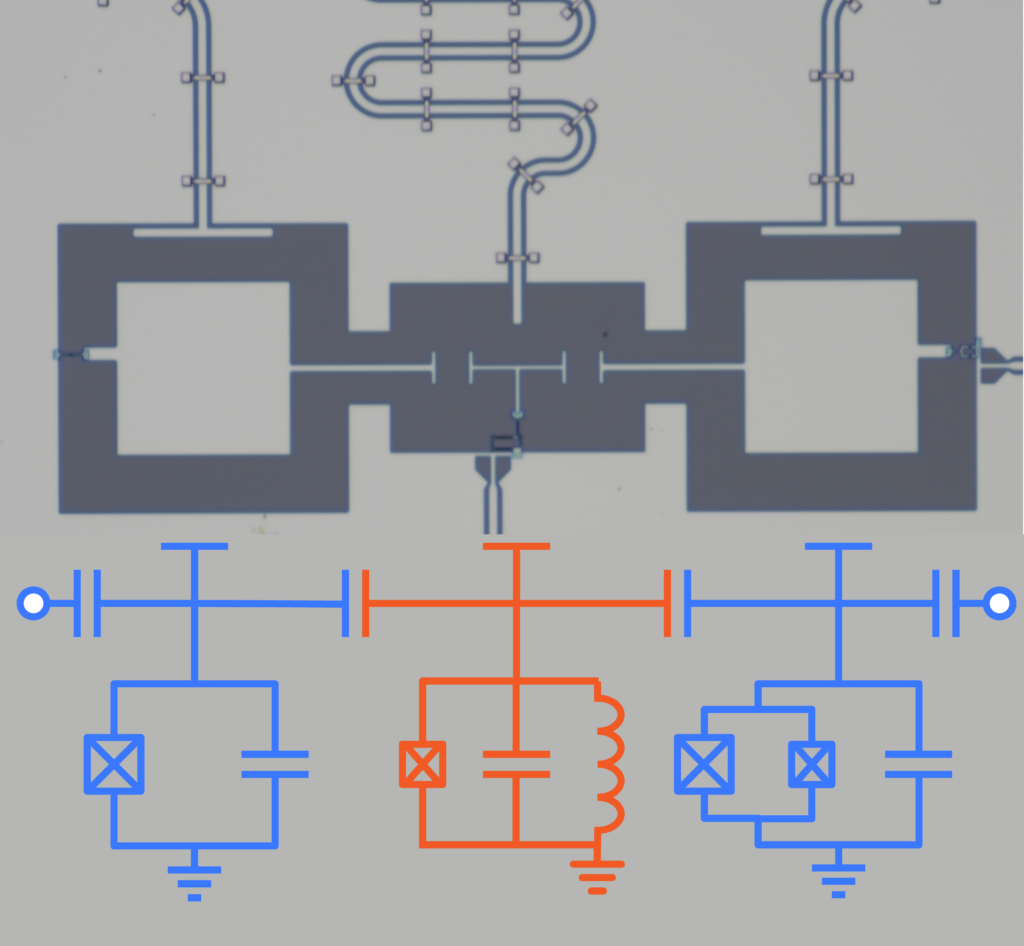
Residual ZZ crosstalk can be a significant source of coherent error in superconducting quantum processors. In conventional all-transmon systems, canceling this crosstalk typically requires closely spaced qubit frequencies, which can worsen susceptibility to microwave crosstalk and frequency crowding. This study uses a fluxonium coupler between two transmon qubits to cancel static ZZ crosstalk while operating outside that restrictive frequency regime. The results identify zero-ZZ operating points with qubit-qubit detuning exceeding 400 MHz, and demonstrate CZ gates with fidelities exceeding 99.6%. This fluxonium-mediated architecture could be a path to low-crosstalk processors.
Congratulations to Junyoung and all co-authors with the MIT EQuS Group!
See also: Editors’ Selection from Physical Review Applied
June 9, 2026
Aziza Almanakly and Beatriz Yankelevich receive MIT EECS thesis awards!
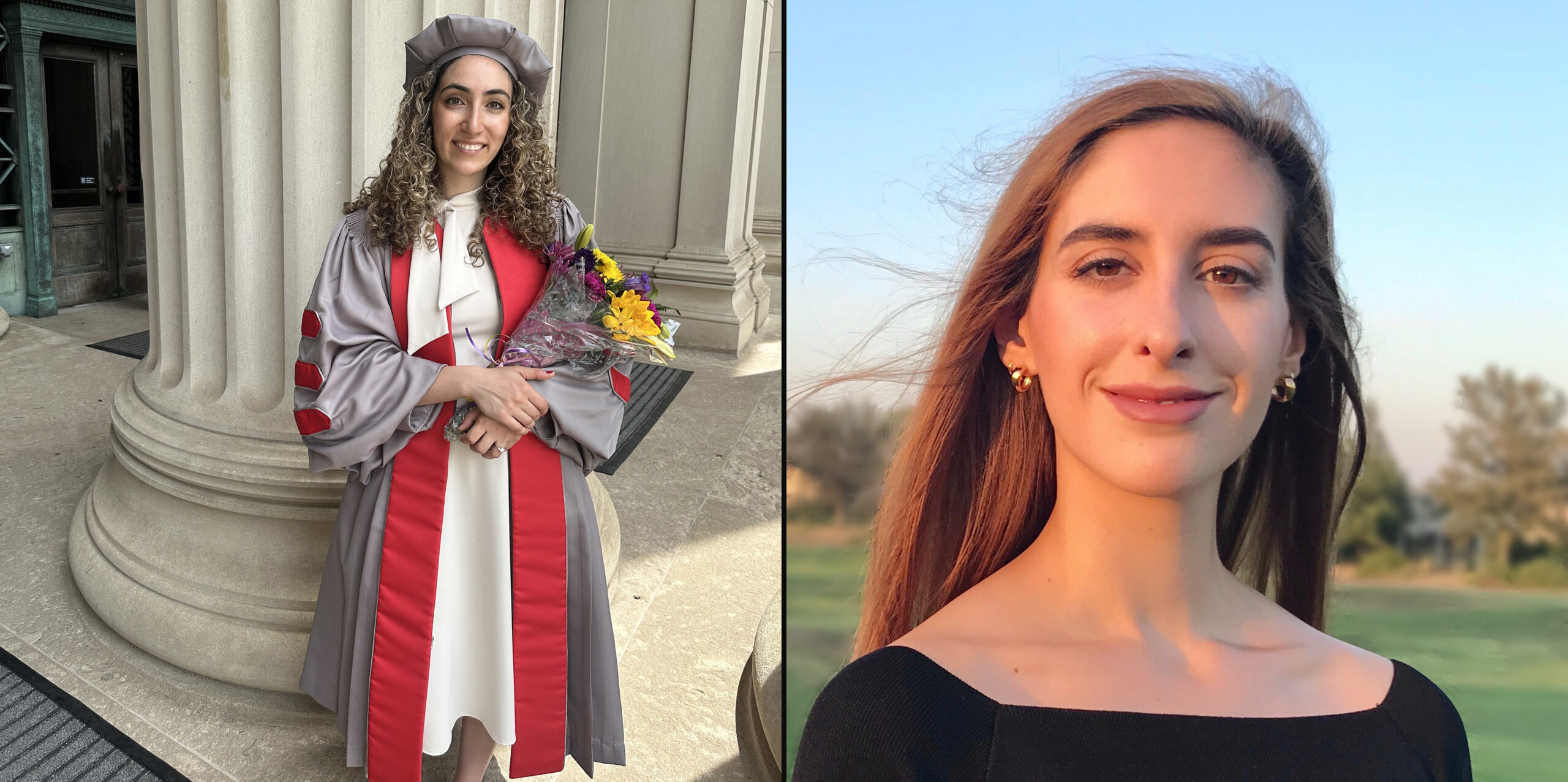
EQuS is pleased to announce that Beatriz Yankelevich (GS) and Dr. Aziza Almanakly (PD) were recognized for their outstanding theses submitted during the past 12 months! Beatriz’s thesis, “Towards Modular Quantum Computing with Chiral Waveguide Quantum Electrodynamics,” was recognized with the Ernst A. Guillemin Thesis Award as this year’s outstanding Master’s thesis in electrical engineering. Aziza’s thesis, “Quantum Networking using Waveguide Quantum Electrodynamics,” was recognized with the Jin-Au Kong Doctoral Thesis Award as this year’s outstanding PhD thesis in electrical engineering. Both Aziza and Beatriz have advanced the field of waveguide QED, quantum interconnects, modularity, and chirality in microwave systems.
Congratulations Aziza and Beatriz on your well-deserved recognition!
May 23, 2026
Graduate student Gyunghun (Hoon) Kim awarded fellowship from KAIST-MIT quantum collaboration funding!
EQuS second-year graduate student Gyunghun (Hoon) Kim has been awarded a fellowship from the KAIST-MIT quantum collaboration! As part of a research collaboration between KAIST and MIT supported by the Korean government, graduate students in the field of quantum computing and science receive research funding and access to resources that accelerate their research. Hoon will participate in this collaboration by continuing his work on quantum simulation using superconducting qubits.
Congratulations, Hoon!
May 22, 2026
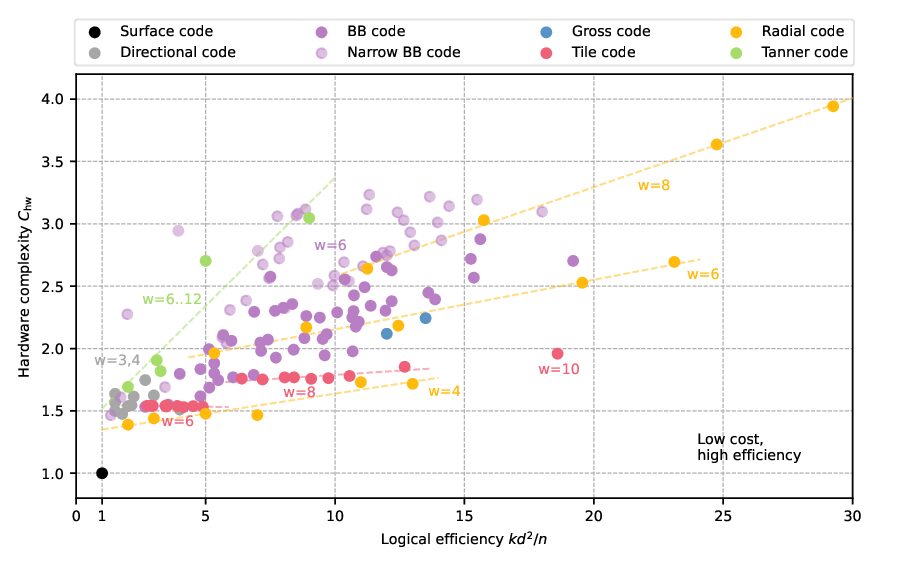
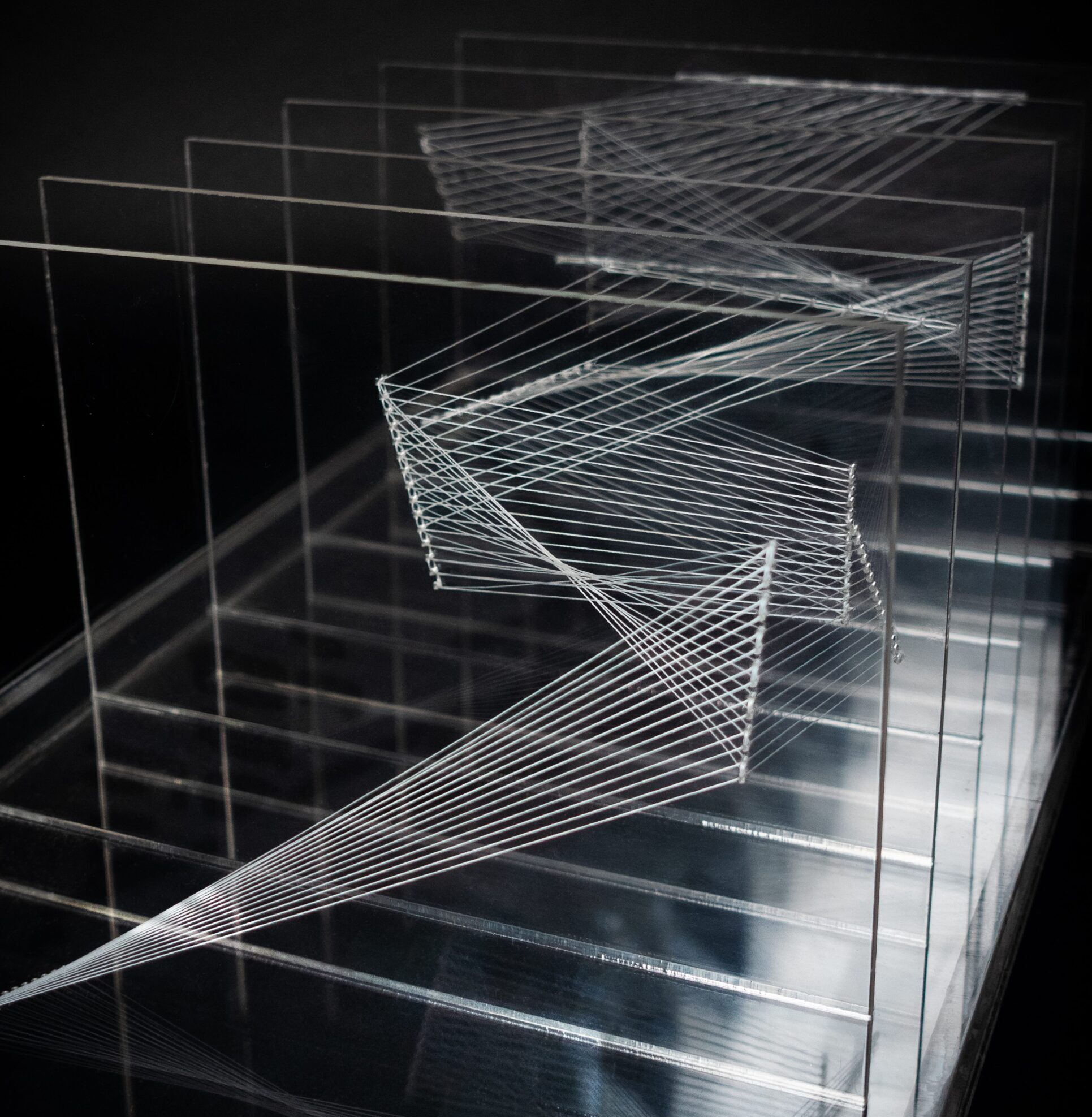
Quantum low-density parity-check (qLDPC) codes provide hardware-efficient ways to realize logical qubits in an error-corrected quantum processor. This efficiency, however, comes at the cost of complicated connectivity between qubits, which is challenging to realize in modalities like superconducting qubits, where the connections are fixed after fabrication. In this work, we introduce a tool dubbed HAL (Hardware-Aware Layout) that provides a mapping between the theoretical connectivity graph of a qLDPC code and real hardware constraints in superconducting qubits. Leveraging new 3D-integration fabrication capabilities at MIT, we demonstrate how around 150 different qLDPC codes could be laid out on multilayer chip stacks. HAL reveals how the underlying structure of a qLDPC code can dramatically impact the physical layout, exposing new trade-offs between logical efficiency and hardware complexity, and providing a blueprint for future, co-designed processors.
Congratulations to Melvin, Lukas, David, and all co-authors!
May 12, 2026
Josephson tunnel junctions, key circuit elements in superconducting quantum computing, are typically modeled by a simple cosine potential. However, recent studies have shown that higher-order harmonic corrections to this potential can lead to observable deviations in circuit behavior. These harmonics can originate from two primary sources: intrinsic Andreev tunneling within the junction and series inductance introduced by its embedding circuitry. In this work, we introduce a method to distinguish between these contributions using superconducting quantum interference devices. We observe harmonic features in device transition spectra that cannot be captured by the standard cosine model but are accurately described by the second harmonic contribution. By analyzing the spectra with multiple devices, we show that series inductance is the dominant source of the observed harmonics.
Congratulations to Junghyun, Max, and all co-authors!

May 7, 2026
EQuS graduate student Maggie Marte wins beam national championship!
EQuS graduate student Maggie Marte won the beam national championship at the 2026 NAIGC Nationals competition in Birmingham, AL with the MIT Club Gymnastics team! Competing at the Diamond level, Maggie scored a 9.8 on both days of competition, and she also earned third place All Around and third on Vault. This marks Maggie’s second NAIGC beam national championship, having previously won the event in 2023 with the Clemson Club Gymnastics team. During finals, she even warmed up alongside her former Clemson teammates. Maggie began competitive gymnastics at age 11 and joined MIT’s club team in September. She will serve as the team’s publicity chair next year and plans to continue competing. Maggie loves that she is able to continue enjoying the sport through grad school.
Congratulations Maggie!
May 5, 2026
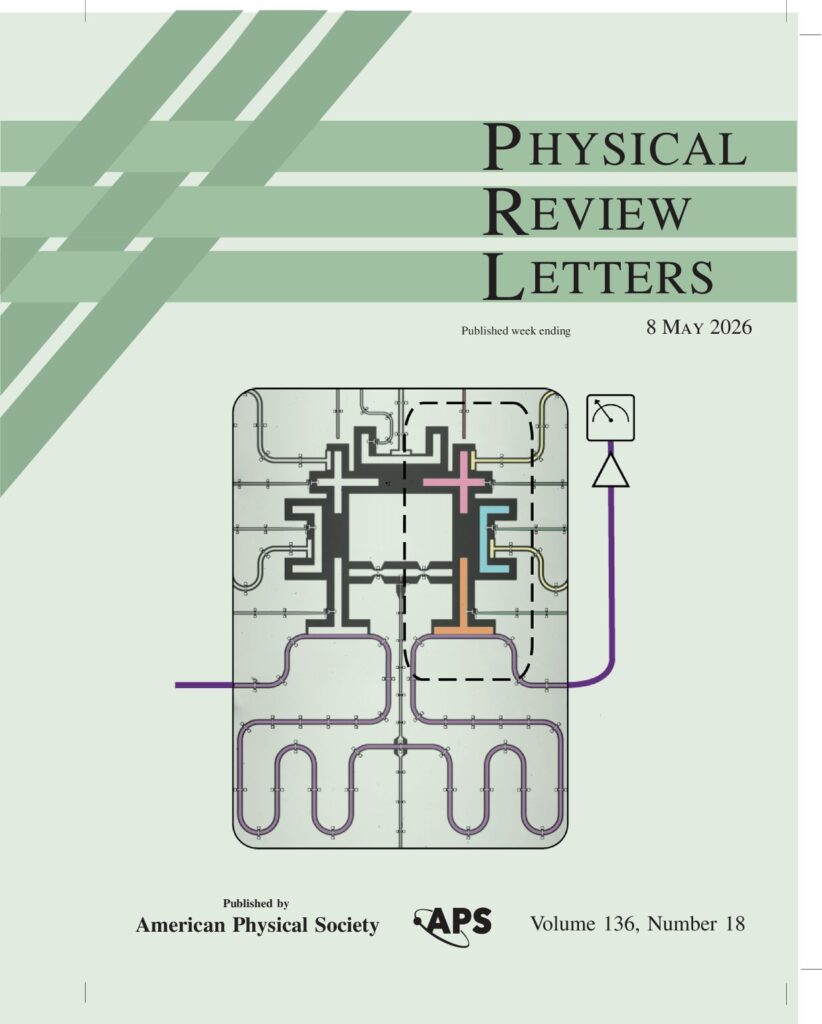
Aziza, Réouven, Harry, and collaborators’ manuscript, “Probing sensitivity near a quantum exceptional point using waveguide quantum electrodynamics,” was published in Physical Review Letters!
Non-Hermitian systems featuring exceptional points (EP) are often assumed to be ideal candidates for quantum-enhanced sensing due to the abrupt spectral response near the EP. In this work, we experimentally test this assumption by emulating a passive PT-symmetric dimer using superconducting qubits in a waveguide quantum-electrodynamical (wQED) architecture. Our measurements confirm that there is no sensitivity enhancement near the passive quantum exceptional point. Ultimately, these findings clarify the limitations of such sensors and establish wQED as a versatile platform for exploring non-Hermitian quantum dynamics.
Congratulations to Aziza, Réouven, Harry and all co-authors!
May 1, 2026
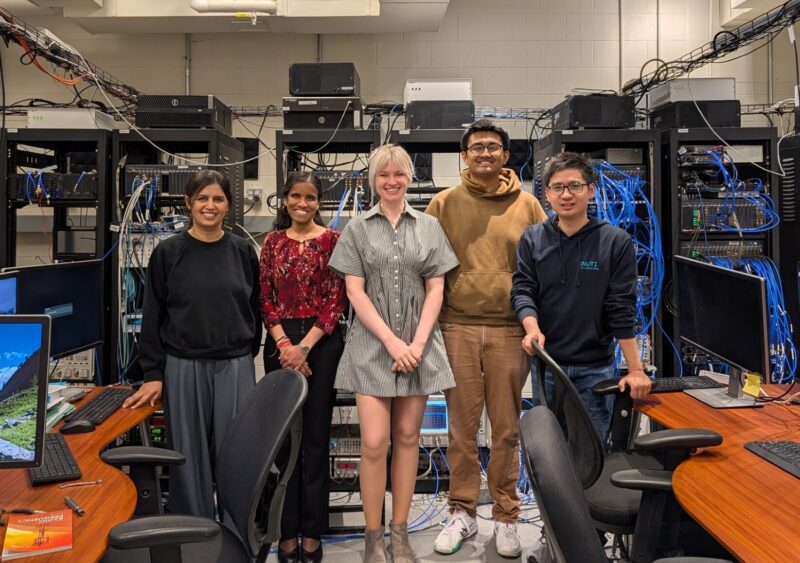
EQuS graduate students Vaishnavi Addala and Shantano Jha host collaborators from NVIDIA!
EQuS graduate students Vaishnavi Addala and Shantanu Jha were glad to host collaborators from NVIDIA for a week-long site visit. Together, they worked on achieving GPU-accelerated speedups in simulation with jaxquantum and in calibration with the DGX Quantum. It was a productive visit filled with scientific discussion, brainstorming, and hands-on collaboration.
April 30, 2026
A materials scientist’s playground
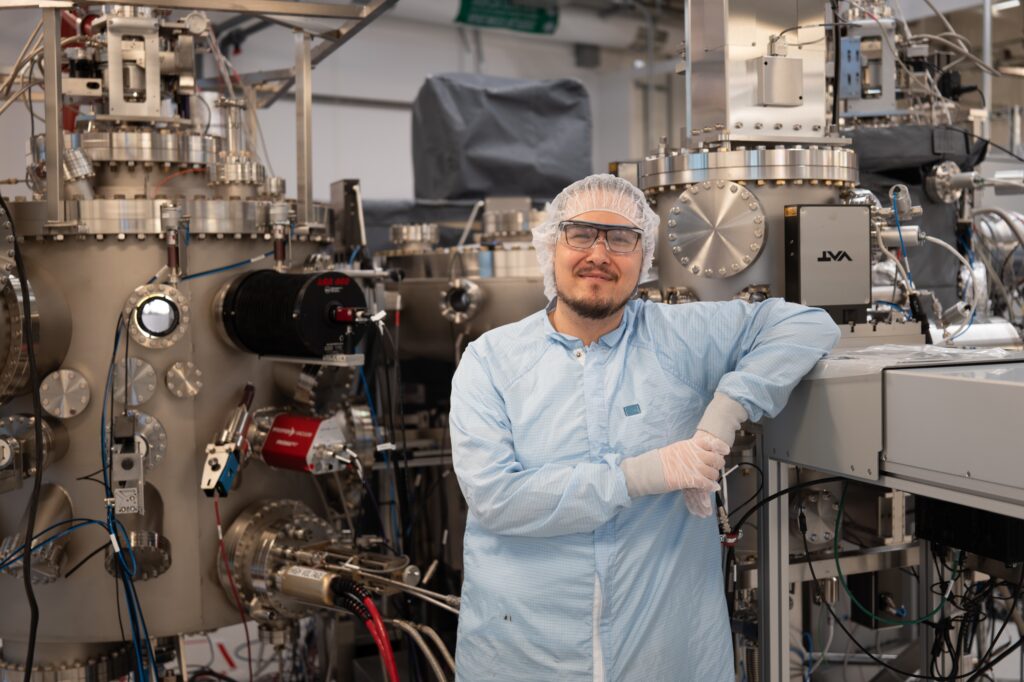
Patrick Strohbeen, a research scientist within EQuS, has led the effort in the installation and commissioning of a new ultra-high vacuum molecular beam epitaxy cluster system from DCA Instruments Oy within the MIT.nano cleanroom. Unique to cleanroom environments, this system is designed from the ground up to use in-situ probes to investigate buried interfaces in superconducting quantum devices. This materials development effort is a necessary step towards realizing robust, reproducible, and extensible superconducting qubits. Read more about this story here.
This was also featured in MIT News
April 21, 2026
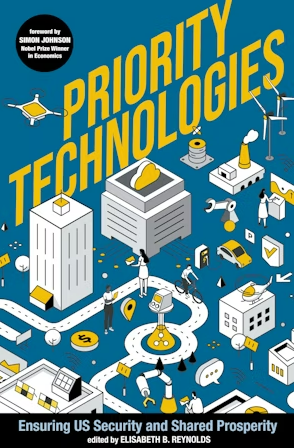
Will Oliver and Jonathan Ruane contribute to the book “Priority Technologies: Ensuring U.S. Security and Shared Prosperity”
Will Oliver (EECS and Physics) and Jonathan Ruane (Sloan School of Management) co-wrote the chapter, “Quantum Computing: Enabling Long-Term U.S. Leadership Through a Sustained and Bold Science and Engineering Agenda” in the book, “Priority Technologies: Ensuring U.S. Security and Shared Prosperity”, edited by Elisabeth Reynolds (Urban Studies and Planning), with a forward by Simon Johnson (Sloan School of Management) and with contributions from several MIT faculty across the Institute, including Elsa A. Olivetti, Jesús del Alamo, J. Christopher Love, William D. Oliver, Jonathan Ruane, and Fiona E. Murray. In this book, MIT faculty analyze how the U.S. can move ahead in multiple key industrial sectors — semiconductors, biotechnology, critical minerals, drones, quantum computing, and advanced manufacturing — to drive the economy and support national security.
February 19, 2026
Day in the Life of a Quantum Engineer!
EQuS postdoc Holly Stemp takes us along with her for the day, to show what a typical day looks like for a quantum engineer in the Research Laboratory of Electronics at MIT.

February 13, 2026
Shoumik and collaborators’ manuscript, “Theory of quasiparticle generation by microwave drives in superconducting qubits,” was selected for a special issue of Physical Review Applied in honor of the International Year of Quantum!
This collection, Quantum Frontiers, highlights research that spans fundamental discoveries to real-world implementations and comprises a curated collection of the top quantum articles in the journal Physical Review Applied. Congratulations to Shoumik and all co-authors with the MIT EQuS Group and MIT Lincoln Laboratory!
January 16, 2026
Shoumik, Max, and collaborators’ manuscript, “Theory of quasiparticle generation by microwave drives in superconducting qubits,” was published as an Editors’ Suggestion in Physical Review Applied!
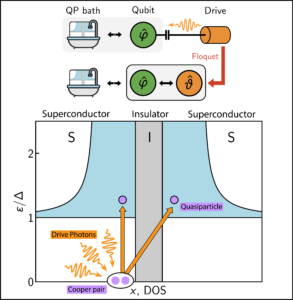
Microwave drives play a central role in controlling and measuring superconducting qubits, and are typically assumed by the superconducting qubit community not to disturb the superconducting material itself. In this work, we present theory and numerical simulations indicating that this assumption does not hold under strong driving. We show that multiple microwave drive photons can still combine to break Cooper pairs and generate quasiparticles (QPs) in superconducting devices, resulting in qubit decoherence. We apply our theory to several next-generation superconducting circuit architectures, compute lifetime limits due to multiphoton-assisted quasiparticle generation, and suggest strategies to mitigate this new loss mechanism.
Congratulations to Shoumik and all co-authors with the MIT EQuS Group and MIT Lincoln Laboratory!
See also: Editors’ Selection from Physical Review Applied

December 6, 2025
Happy Holidays from EQuS!
As we bring this productive year to a close, we express our sincere appreciation to our sponsors, partners, and collaborators for their steadfast support, as well as to every member of EQuS and our colleagues at MIT Lincoln Laboratory for their dedication and contributions. Your collective efforts have been instrumental in all that we have accomplished.
We were delighted to celebrate these achievements together at our holiday gathering at Glass House, where families, friends, and the EQuS community enjoyed an evening of good food, great company, and music by the Harmonic Modes, our very own lab band. One of the highlights of the evening was a surprise visit from Jeff Grover as the holiday Bluefors fridge!
As we look forward to 2026, we send our warmest wishes for a joyful holiday season and a New Year filled with new opportunities, continued learning, and shared success.
December 4, 2025
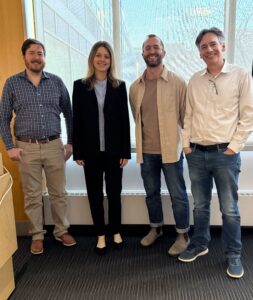
Lamia Ateshian successfully defended her PhD thesis!
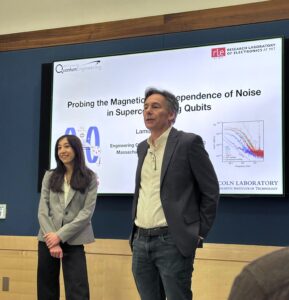
EQuS graduate student, Lamia Ateshian, successfully defended her PhD thesis on December 4, 2025! Lamia joined the group in 2021, and her graduate studies were supported by the Doc Bedard Fellowship, the NSF GRFP Fellowship, and the Alan L. McWhorter Fund Fellowship. Lamia’s thesis, titled “Probing the Magnetic-Field Dependence of Noise in Superconducting Qubits,” explored the properties of the intrinsic noise that limits the coherence of superconducting qubits. In the first main experiment, Lamia applied in-plane magnetic fields to flux qubits and used noise spectroscopy techniques to explore the noise trends, revealing previously unobserved behavior in the ubiquitous 1/f magnetic flux noise. In the second experiment, she investigated the magnetic-field and temperature dependence of flux and charge noise in a fluxonium qubit. These works offer experimental characterizations that should inform future microscopic theories of intrinsic noise in superconducting qubits.
After EQuS, Lamia will join Google Quantum AI as a Research Scientist. Congratulations, Lamia!
November 24, 2025
Sarah Muschinske successfully defended her PhD thesis!
EQuS graduate student, Sarah Muschinske, successfully defended her PhD thesis on November 24, 2025! Sarah joined the group in 2020, and her graduate studies were supported by a NASA Space Technology Research Fellowship. Sarah’s thesis focused on the development of arrays of transmon qubits for quantum simulation applications. To mitigate issues in planar devices such as crosstalk and line crowding, Sarah designed and simulated 16- and 21-qubit arrays into a 3D-integration fabrication process. These devices enabled experiments that probed the nature of entanglement entropy in many-body systems and realized synthetic magnetic fields, and they could eventually study interesting condensed matter phase transitions.
After EQuS, Sarah will join AWS Center for Quantum Computing as a Research Scientist. Congratulations, Sarah!
October 30, 2025
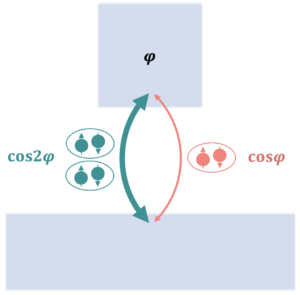
Superconducting circuits are among the most promising building blocks for quantum computers. Yet today’s leading designs—transmons and fluxoniums—still suffer from environmental noise that causes qubits to lose information. A central challenge is creating qubits that are naturally protected from both “bit-flip” errors (where a 0 turns into a 1) and “phase-flip” errors (where the coherence of a superposition is lost). We introduce a new qubit design, which we call the “harmonium,” that tackles this challenge by carefully engineering the quantum energy landscape of the circuit. Instead of relying on a single periodic potential, harmonium combines two different “harmonics” of the Josephson energy, corresponding to tunneling of Cooper pairs one-by-one and two-by-two, respectively. Together, these harmonics produce two stable, nondegenerate wells. The quantum states of the qubit are confined to separate wells, which suppresses bit-flip errors, while a symmetry between the wells suppresses phase-flip errors.
Congratulations to Max and all co-authors!
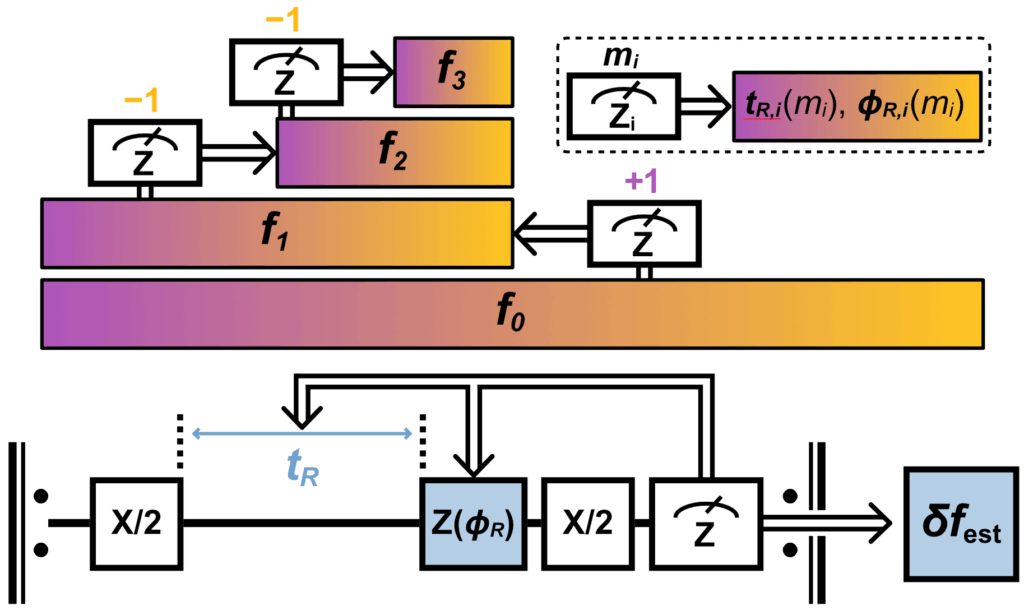
We present and experimentally implement a real-time protocol for calibrating the frequency of a resonantly driven qubit, achieving exponential scaling in calibration precision with the number of measurements. We show the efficacy of the algorithm by stabilizing a flux-tunable transmon qubit, leading to improved coherence and gate fidelity, and resilience to non-Markovian noise. Our protocol highlights the importance of feedback in improving the calibration and stability of qubits subject to drift and can be readily applied to other qubit platforms.
This work was a collaboration between the Niels Bohr Institute, MIT, Norwegian University of Science and Technology, and Leiden University. Congratulations to Fabrizio, Lukas, Melvin, and all co-authors!
This work was also featured in a news article from the Niels Bohr Institute.
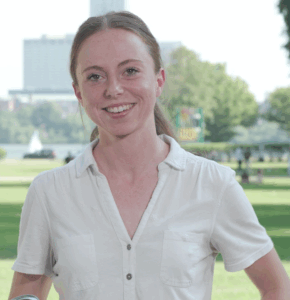
Dr. Holly Stemp awarded the UNSW Malcolm Chaikin Prize!
Dr. Holly Stemp, a current Postdoctoral Associate in the EQuS group, was awarded this year’s Malcolm Chaikin prize for Research Excellence in Engineering for her PhD thesis carried out at the University of New South Wales (UNSW) in Sydney, Australia. This prestigious prize is awarded annually to the doctoral student who is judged to have produced the best PhD thesis in the UNSW Faculty of Engineering.
Holly’s PhD research was on the topic of donor atom spin qubits in silicon. Her thesis entitled “Entangling electrons and nuclei in a four-qubit, two-atom device in silicon” focused on coupling remote donor nuclei by using the exchange interaction between donor-bound electrons to mediate the nuclear interaction.
In her current role at EQuS, Holly is working on a project to couple distant quantum dot spin qubits via a superconducting qubit coupler. Congratulations, Holly!
July 22, 2025
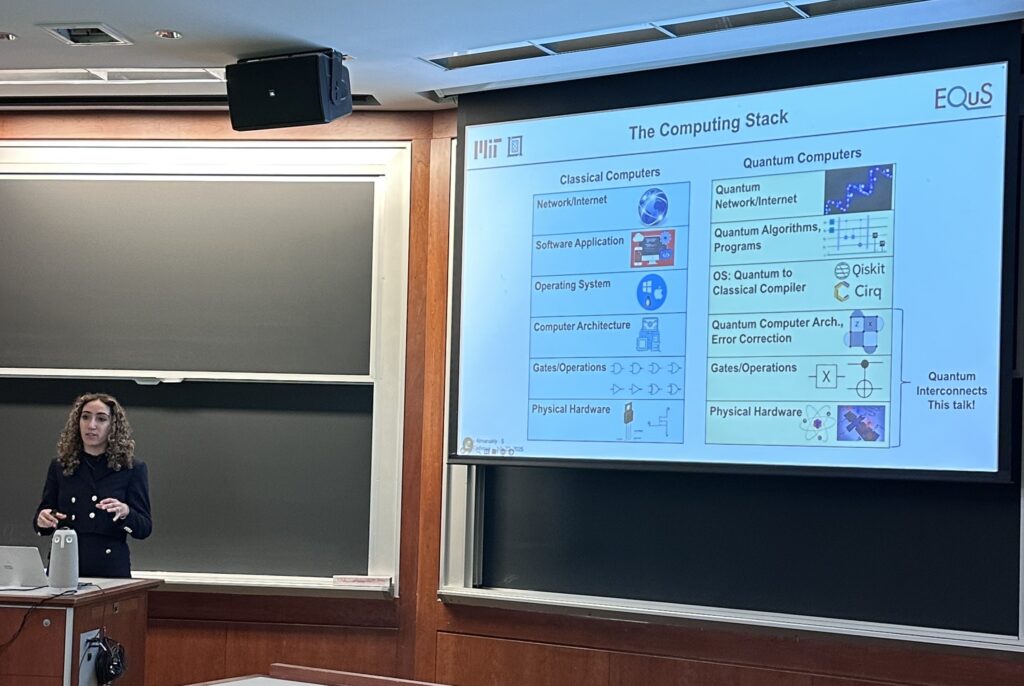
Aziza Almanakly successfully defended her PhD thesis!
EQuS graduate student, Aziza Almanakly, successfully defended her PhD thesis on July 22, 2025! Aziza joined the group in 2020, and her graduate studies were supported by the Paul and Daisy Soros Fellowship, the Clare Boothe Luce Fellowship, and the Alan L. McWhorter Fund Fellowship. Aziza’s thesis, titled “Quantum Networking using Waveguide Quantum Electrodynamics,” describes the development of a superconducting quantum interconnect that uses directional photons to generate remote entanglement. The first main experiment realizes a superconducting module which generates on-demand directional emission of microwave photons by exploiting quantum interference. In the second experiment, Aziza builds an interconnect comprising two modules and generates remote entanglement using directional photon emission and absorption. This work enables a quantum network architecture with all-to-all connectivity for modular, distributed quantum computation.
Aziza will continue as a postdoctoral researcher in EQuS until September 2026, after which she will begin her appointment as an Assistant Professor of Electrical and Computer Engineering at New York University. Congratulations, Aziza!
July 11, 2025
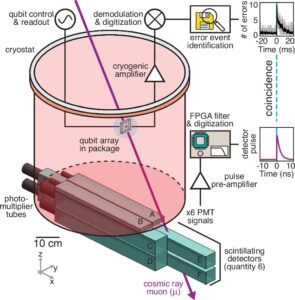
While large-scale quantum computation will likely require error correction, current leading implementations using superconducting qubits can be limited by correlated errors. We show that 17% of these correlated errors can be attributed to cosmic-ray muons impacting the qubit chip. As these cosmic rays are challenging to shield against without operating in deep underground laboratories, this work highlights the need to engineer the qubits themselves to be insensitive to radiation. To this end, we observe that chip-level design choices can affect a qubit’s response to particle interactions.
This work was a collaborative effort between MIT EQuS, Joe Formaggio’s group, and MIT Lincoln Laboratory. Congratulations to Pat and all co-authors!
June 16, 2025
This paper describes an experiment where we used a quantum computer to study how particles move through a flat-band material. Materials with flat electronic band structures have attracted intense interest following the recent discovery of superconductivity in twisted bilayer graphene. We used 10 superconducting qubits to emulate a tight-binding model on the rhombic lattice, and we added a synthetic magnetic field using a method we previously demonstrated in Nature Physics 20, 1881-1887 (2024). A key advantage of our approach is the ability to easily reprogram the quantum computer to tune the band structure—something that is extremely difficult to achieve in real materials. Depending on the synthetic magnetic field, the rhombic lattice exhibits between 1 and 3 flat bands. This control allowed us to systematically study the competing effects of disorder, interactions, and band flatness, and to observe how their interplay influences conductivity.
Congratulations to Ilan Rosen, and all co-authors in the MIT EQuS Group!
June 5, 2025
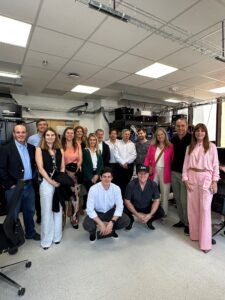
Max Hays Hosts ChileMass Delegation!
Max Hays recently gave a presentation on quantum computing to members of the Chile Massachusetts Alliance, followed by a guided tour of our new lab facilities.
The Chile Massachusetts Alliance (ChileMass) is a Cambridge-based nonprofit that strengthens collaboration between Chile and Massachusetts in the areas of science, technology, and innovation. The organization brings together companies, startups, universities, investors, and local communities to launch joint projects, programs, and partnerships across both regions.
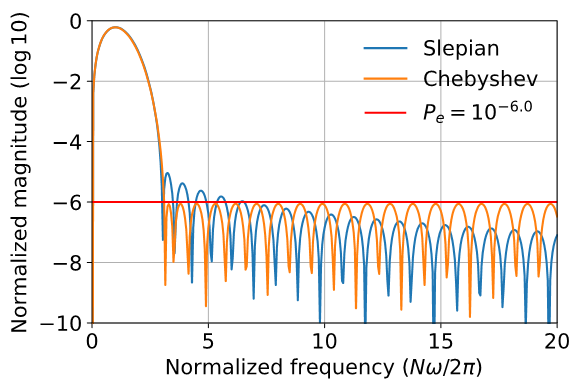
Despite progress towards achieving low error rates with superconducting qubits, error-prone two-qubit gates remain a barrier to realizing larger-scale quantum computers. Baseband-control is commonly used to realize two-qubit phase gates. However, the gate fidelity depends heavily on the precise shape of the baseband pulse, and imperfections lead to phase errors and leakage out of the computational basis. In this work, we use a signal-processing approach to design the pulse shape. We investigate a Chebyshev-based trajectory as an alternative to the widely used Slepian-based trajectory and explore the relative advantages. Results show that the Chebyshev-based trajectory can be designed to achieve lower leakage error and infidelity in certain cases.
Congratulations to Andy Ding, and all co-authors in the MIT EQuS Group, the Digital Signal Processing Group, and Mitsubishi Electric Research Laboratories!
May 29, 2025
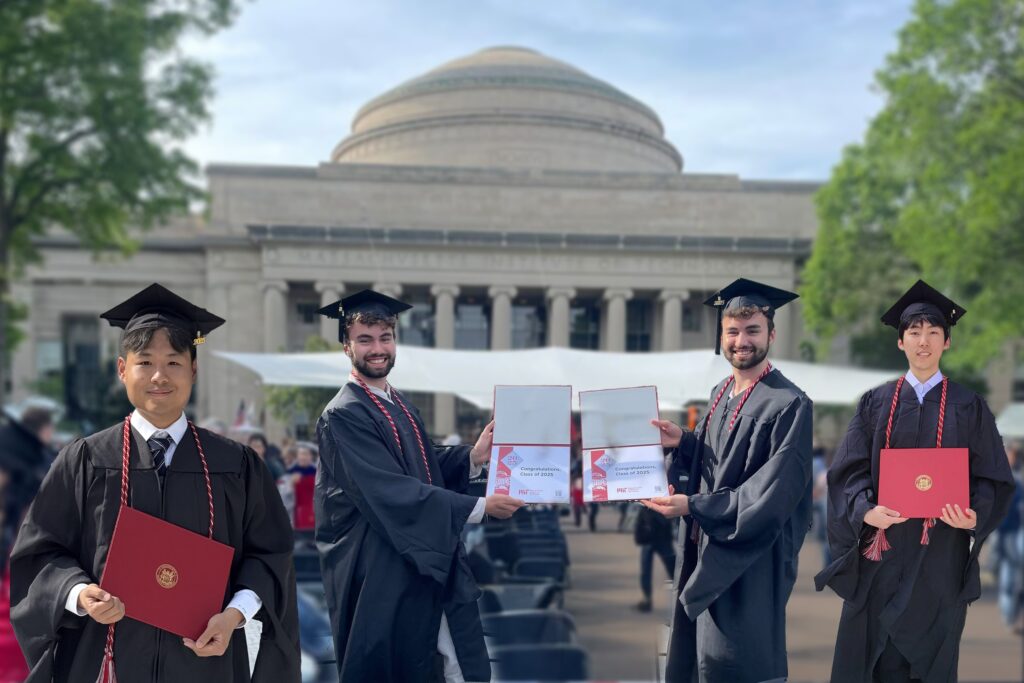
Congratulations to the 2025 EQuS Graduates!
Congratulations Harry Kang, Junghyun Kim, David Pahl, and Lukas Pahl, who all earned their Master of Science in Electrical Engineering and Computer Science based on research performed in the EQuS group.
The masters theses are on the topics:
- Harry Kang: “Investigation of Two Qubit Gates between Remote Spin Qubits using a Superconductor Coupler”
- Junghyun Kim: “Design and Engineering of Protected Superconducting Qubits”
- David Pahl: “Simulation and Design of Quantum Processors for Low-Overhead Quantum Error Correction”
- Lukas Pahl: “Calibratoin and Control of Superconducting Qubits for Low-Overhead Quantum Error Correction”
All four will continue their work as PhD students in EQuS. Please join us in congratulating Harry, Junghyun, David, and Lukas!
May 21 – 30, 2025
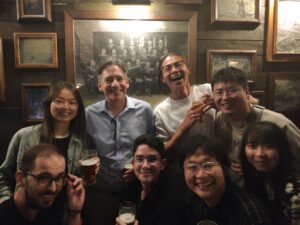
Professor Will Oliver teaches at Benasque Science Center in Benasque, Spain!
Professor Will Oliver gave two lectures at the Benasque Science Center’s Spring School on Superconducting Qubit Technology. Expert speakers from universities, research institutes, and corporations around the world were invited to speak on a broad range of subjects from the basics to the specific techniques required to design, fabricate, and operate quantum devices based on superconducting circuits.
April 23, 2025
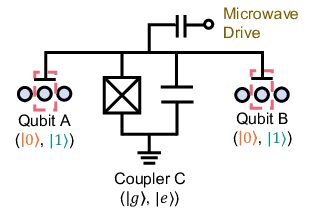
Spin qubits confined in quantum dots are promising candidates for quantum computation, but a significant challenge is the dense wiring required to control quantum dots situated extremely close together.
To overcome this limitation, we have proposed using a charge-sensitive superconducting circuit, known as the offset-charge-sensitive (OCS) transmon, as a coupler that entangles distant spin qubits. We investigated two distinct ways of implementing a CZ gate: a rapid, off-resonant pulse for quick interactions and a more tailored pulse, using pulse-envelope engineering, with dynamical decoupling to mitigate the effects of charge noise on spin qubits. Time-domain simulations demonstrated that these strategies can achieve gate fidelities exceeding 90% under realistic conditions.
This research represents an important step towards leveraging the strengths of superconducting circuits in spin-based quantum computing.
Congratulations to Harry and all co-authors with the MIT EQuS Group!

March 21, 2025
In this work, we construct a quantum interconnect by using a waveguide to connect two superconducting, multi-qubit modules. We emit and absorb microwave photons on demand and in a chosen direction between these modules using a quantum interference effect. To optimize the emission and absorption protocol, we implement a reinforcement learning algorithm to shape the photon for maximal absorption efficiency. By halting the emission process halfway through its duration, we generate remote entanglement between modules in the form of a four-qubit W state. This quantum network architecture enables all-to-all connectivity between non-local processors for modular, distributed, and extensible quantum computation.
Congratulations Aziza Almanakly, Beatriz Yankelevich, and all co-authors with the MIT EQuS Group and MIT Lincoln Laboratory.
This was also featured in MIT News
March 18, 2025
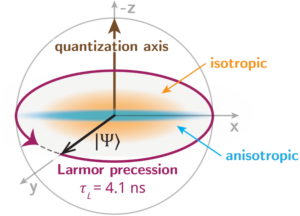
Quantum systems slowly lose information to their environments over time in a process called decoherence. The physics of decoherence is of fundamental interest, and its study often inspires strategies to increase the coherence of state-of-the-art devices.
In this work, we report the first observation of a basic feature of qubit decoherence: oscillations in the purity of a qubit state arising from the asymmetry of its transverse noise environment. Although such asymmetric noise environments are common across leading experimental platforms including superconducting qubits, neutral atoms, and trapped ions, purity oscillations are overlooked by typical models of decoherence. This work confirms our understanding of decoherence on the timescale set by the qubit frequency, and can inspire new techniques to disentangle charge and flux noise in low-frequency superconducting qubits.
Congratulations, David and all co-authors with the MIT EQuS Group and MIT Lincoln Laboratory.
February 5, 2025
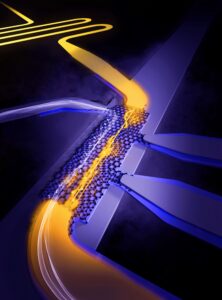
In this study, we probe the superfluid stiffness of magic-angle twisted bilayer graphene (MATBG) using circuit quantum electrodynamics (cQED). By integrating a MATBG sample into a superconducting quarter-wave resonator, we track its frequency shift as a function of Fermi energy, temperature, and bias current. This approach provides crucial insights into the pairing symmetry and the role of quantum geometry in MATBG and other correlated superconductors.
Understanding the mechanisms of unconventional superconductivity is one key to advancing quantum materials research and unlocking new applications. Our work introduces a new platform to explore atomically thin superconductors in both the DC and microwave regimes—a step forward for fundamental physics and future quantum technologies.
Congratulations, Miuko Tanaka, Joel Wang, and all co-authors with the MIT EQuS Group, MIT Lincoln Laboratory, and the Jarillo-Herrero Group.
This was also featured in MIT News
January 15 – 16, 2025
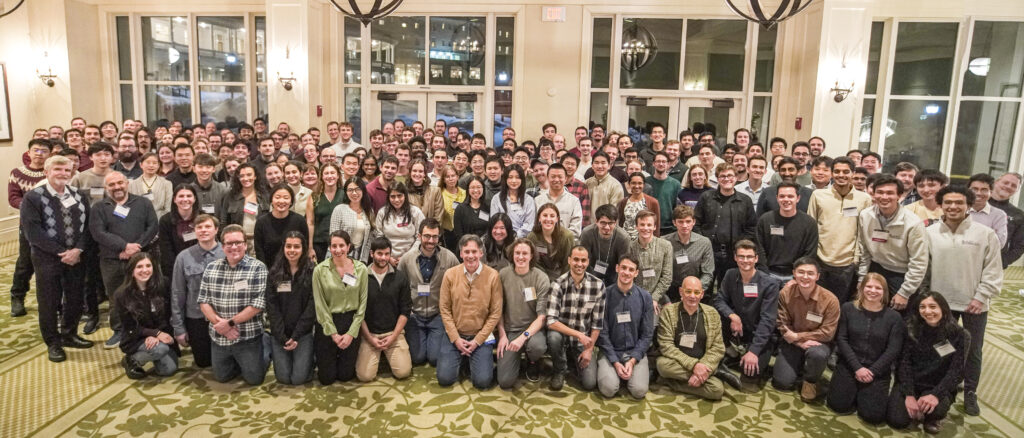
The 2025 Quantum Science and Engineering Consortium (QSEC) Annual Research Conference (QuARC) was held at the beautiful Omni Mount Washington resort in New Hampshire. Over 200 people attended this year’s conference! Highlights included student pitches and poster sessions where the latest results from MIT research were presented. The winners for each pitch and session were selected by MIT faculty and researchers.
EQuS graduate student Hung-Yu Tsao won a best poster award for his poster, “Stencil Mask-Enabled Fabrication for Superconducting Qubits.”
EQuS postdoc Doug Pickney and graduate student Qi (Andy) Ding both won best pitch awards for their poster pitches, “Examining the Effect of Various Radioactive Sources on Superconducting Qubits Protected Through Gap-Engineering” and “Frequency-Modulated Microwave Drives for Single- and Two-Qubit Gates.”
Congratulations Hung-Yu, Doug and Andy! Also, special thanks to Beatriz Yankelevich, Sameia Zaman and other QuARC committee members for organizing this event!

January 10, 2025
Professor Will Oliver teaches at KAIST-MIT Quantum Winter School
Professor Will Oliver gave a plenary talk and two lectures at the 2025 KAIST-MIT Quantum Winter School. The Quantum Winter School involves undergraduates from KAIST, SNU, and other universities across South Korea. The aim is to advance quantum information science and technology, and it serves to support increased engagement between the KAIST and MIT. Lectures were also given by Prof. Kevin O’Brien (MIT), Prof. Soonwon Choi (MIT), and Prof. Paola Cappellaro (MIT). Thanks to Prof. Eunseong Kim for organizing this fantastic winter school! From left to right: Prof. Eunseong Kim (Chair, Graduate School of Quantum Science and Technology, KAIST), Prof. Kwang Hyung Lee (President of KAIST), Prof. Kevin O’Brien (MIT), and Prof. Will Oliver (MIT).